How Much Protein Do You Need?
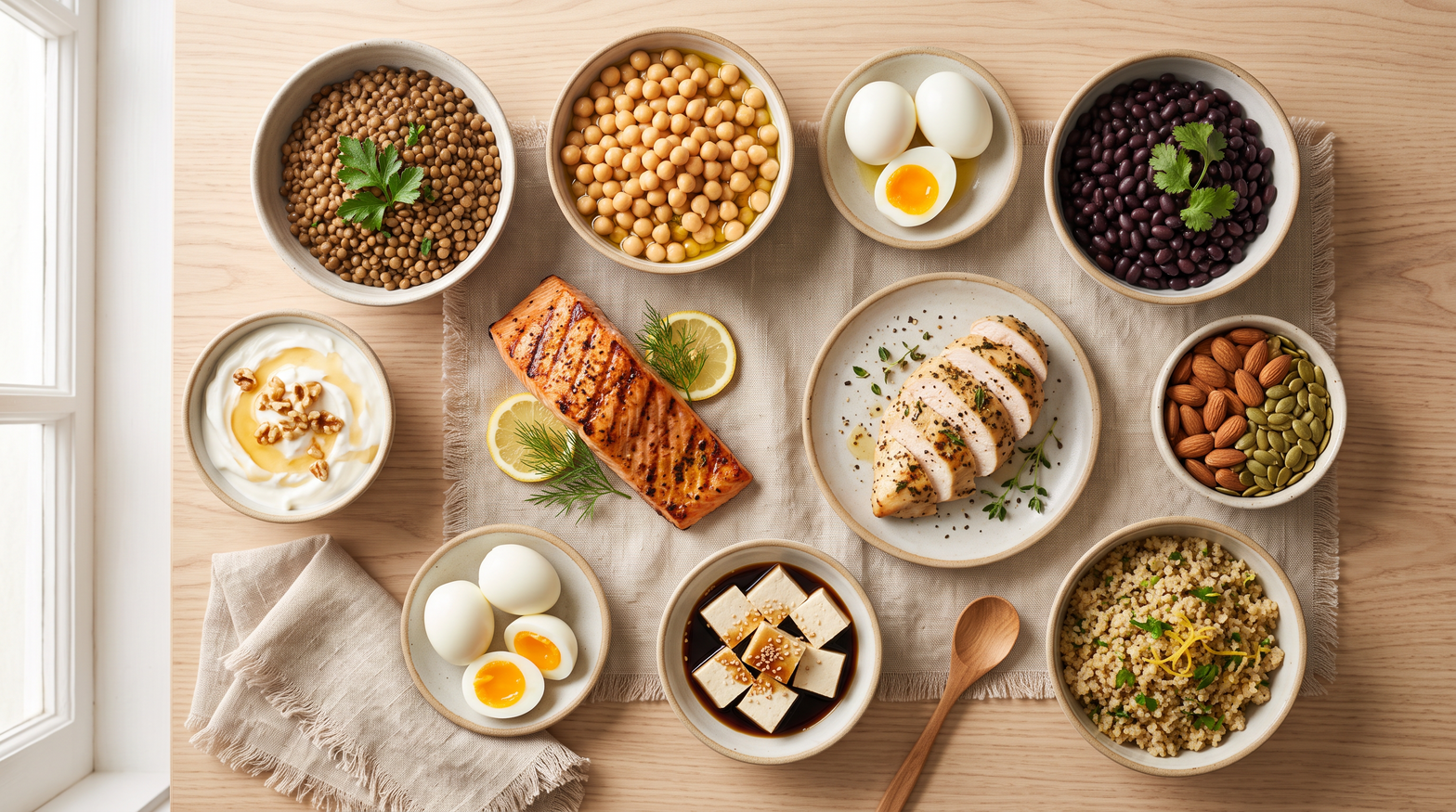
Protein is having a moment. It has been added to coffee creamer, breakfast cereal, ice cream, bottled water, and snack bars that were doing fine without it. Somewhere between the genuine science and the marketing, a reasonable question got buried: how much do I actually need, and where should it come from?
The honest answer is less dramatic than the packaging suggests — and more nuanced than a single number.
Start with the baseline
The established minimum for healthy adults is 0.8 grams of protein per kilogram of body weight per day. For a 150-pound adult, that is roughly 55 grams.
It is worth understanding what that figure represents. It is the amount required to prevent deficiency in most healthy people — a floor, not a target for thriving. Research over the past two decades suggests that many adults do better somewhat above it.
Reasonable working ranges:
- Sedentary healthy adults: 0.8 to 1.0 g/kg
- Regularly active adults: 1.2 to 1.6 g/kg
- Serious strength training: 1.6 to 2.0 g/kg, with limited added benefit beyond that
- Adults over 65: 1.0 to 1.2 g/kg, and often higher
- Pregnancy and lactation: increased needs — discuss specifics with your obstetric team
- Recovering from surgery, injury, or serious illness: elevated, sometimes substantially
Note that these are calculated on kilograms. Divide your weight in pounds by 2.2 to convert.
Who genuinely needs more
Older adults
This is the group most likely to be under-consuming protein and most likely to be harmed by it. Beginning around age 50, adults lose muscle mass steadily — a process called sarcopenia that contributes directly to falls, fractures, frailty, and loss of independence.
Aging muscle is also less responsive to protein, meaning older adults need a larger dose per meal to trigger the same muscle-building response. Combine that with reduced appetite and the pattern becomes clear.
Protein alone will not preserve muscle. Resistance exercise is the necessary partner. Protein supplies the raw material; strength training provides the signal to use it.
People taking GLP-1 medications
Medications such as semaglutide and tirzepatide reduce appetite substantially and produce meaningful weight loss — but a portion of that loss is lean tissue rather than fat. When total food intake drops sharply, protein intake often drops with it.
If you are on one of these medications, prioritize protein within a smaller appetite and pair treatment with resistance training. This is a conversation worth having explicitly with your care team rather than managing alone.
Athletes and heavy exercisers
Real, but frequently overstated. Needs increase with training load; they do not increase without limit. Beyond roughly 2.0 g/kg, additional protein is simply metabolized for energy.
Timing matters more than most people realize
Typical American eating patterns are lopsided: a carbohydrate-heavy breakfast, a modest lunch, and a large protein-dense dinner. The body cannot bank a surplus for later.
Distributing protein across the day — roughly 25 to 35 grams per meal — stimulates muscle protein synthesis more effectively than concentrating it into one sitting.
Practical adjustments:
- Add eggs, Greek yogurt, cottage cheese, or a legume-based dish to breakfast
- Build lunch around a protein source rather than treating it as a garnish
- Include protein in snacks — nuts, edamame, hummus, or yogurt
- Redistribute rather than simply adding, if your total intake is already adequate
Where protein should come from
Protein does not arrive alone. It comes packaged with saturated fat, sodium, fiber, or none of those — and that packaging determines much of the health effect.
Excellent sources
- Fish and seafood — salmon, sardines, and trout add omega-3 fats
- Legumes — lentils, chickpeas, black beans; protein plus substantial fiber
- Poultry, skinless
- Plain Greek yogurt and cottage cheese
- Eggs
- Tofu, tempeh, and edamame
- Nuts and seeds, in modest portions
Worth limiting
- Processed meats — bacon, deli meats, sausage, and hot dogs are classified as Group 1 carcinogens and are associated with colorectal cancer and cardiovascular disease
- Fatty cuts of red meat, in frequent large portions
- Fried protein preparations
- Protein-fortified ultra-processed snacks, which frequently carry more added sugar and sodium than protein
A candy bar with 10 grams of added protein is still a candy bar.
On plant protein
The old concern about needing to combine plant proteins at every meal has not held up. Eating a variety of plant proteins across the day supplies all essential amino acids. Plant-forward eating patterns are consistently associated with lower cardiovascular and metabolic risk.
Do you need protein powder?
For most people, no. Whole foods deliver protein alongside fiber, vitamins, and minerals that supplements lack.
Powder is genuinely useful in narrower situations: after bariatric surgery, during recovery from illness, for older adults with poor appetite, for people on appetite-suppressing medication, or for athletes with high needs and limited time.
If you use one, choose a product with third-party testing certification. Supplements are not reviewed by the FDA for safety or accuracy before sale, and independent testing has repeatedly found protein powders containing heavy metals or ingredients not listed on the label.
Can you overdo it?
In healthy people with normal kidney function, high protein intake has not been shown to cause kidney damage. That claim is widely repeated and poorly supported.
The real considerations are different:
- If you have chronic kidney disease, protein intake genuinely needs to be individualized. Do not increase it without speaking to your nephrology or primary care team.
- Displacement. Very high protein intake often crowds out vegetables, fruit, whole grains, and the fiber that comes with them. Most Americans consume roughly half the fiber they need.
- Cost. Protein is the most expensive macronutrient, and specialty products carry a substantial premium over lentils and eggs.
A simple way to start
Skip the tracking apps for a week and try this instead: include a recognizable protein source at every meal, aim for roughly a palm-sized portion, make plants the source at least half the time, and pair it with two strength sessions a week.
For anyone managing diabetes, kidney disease, or recovering from surgery, nutrition guidance should be individualized. Registered dietitians work alongside clinical teams across Vanderbilt Health to build plans that fit your medical picture and your actual life.
This article is for general education and is not a substitute for professional medical or nutritional advice. To discuss nutrition care at Vanderbilt Health, call (615) 343-4444 or (800) 288-5000.
More from the blog