Take Your Blood Pressure Correctly
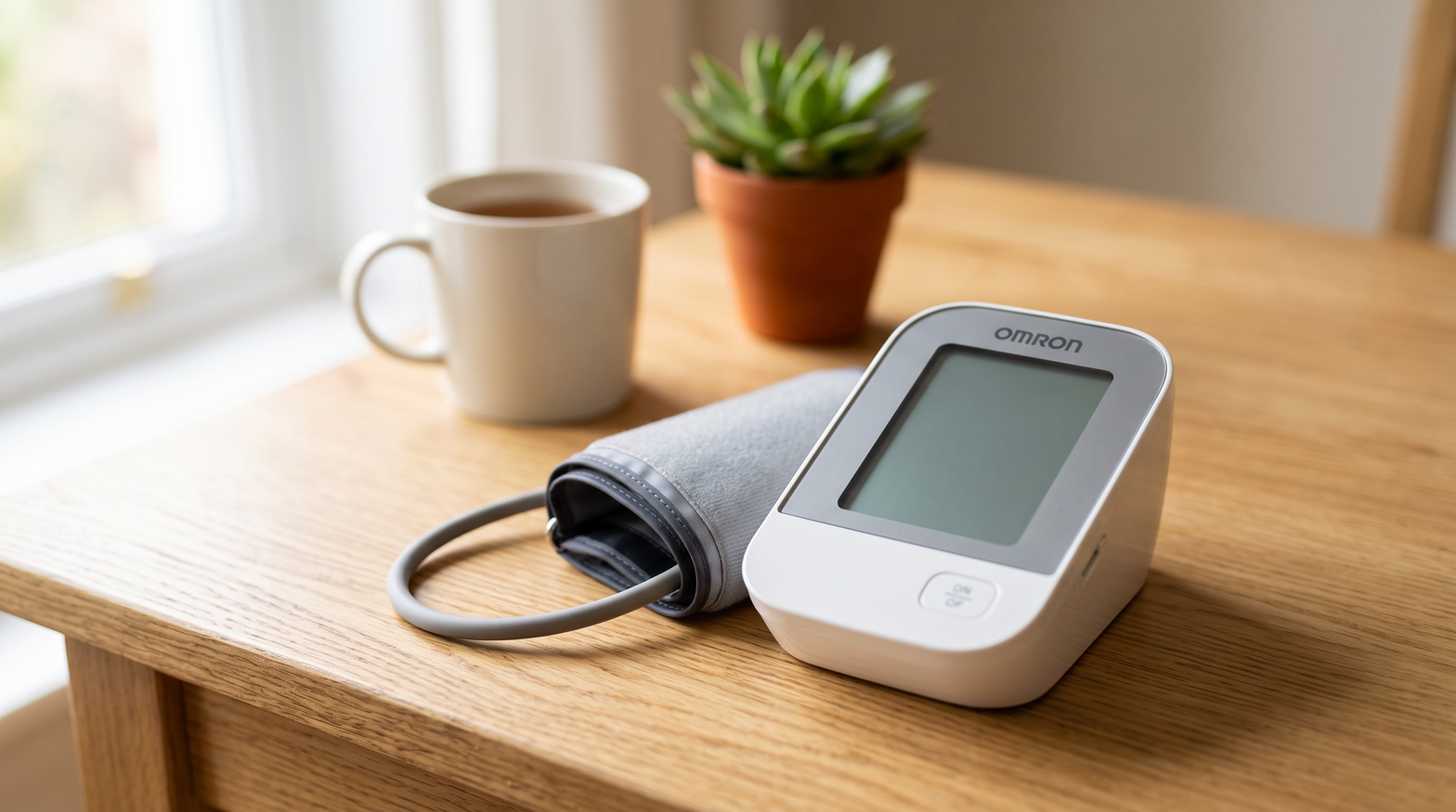
High blood pressure has earned its nickname. The silent killer rarely produces symptoms until it has already damaged arteries, kidneys, eyes, or the heart itself — and nearly half of American adults have it, with a substantial share unaware. Tennessee's rates run higher than the national average.
The encouraging part is that hypertension is one of the most treatable conditions in medicine, and home monitoring is one of the most useful tools patients have. Readings taken in your own kitchen, over weeks, tell your care team far more than a single measurement taken in a clinic hallway after you rushed in from a parking garage.
The catch is that most people take home readings incorrectly, and small errors produce large distortions. Here is how to get numbers your clinician can actually act on.
Choosing the right monitor
Equipment matters more than people expect.
- Choose an upper-arm cuff, not a wrist or finger device. Wrist monitors are highly sensitive to position and generally less reliable for clinical decisions.
- Confirm the device is clinically validated. Independent validation listings are published online; a device being sold in a pharmacy is not the same as a device being accurate.
- Measure your arm and match the cuff size. A cuff that is too small produces falsely high readings — one of the most common sources of error. Many standard cuffs do not fit larger arms, and a large-size cuff is worth purchasing.
- Automatic is fine. Digital, automatic inflation devices are appropriate for nearly all home users.
Bring your monitor to your next appointment. Your care team can compare it against clinic equipment to confirm it reads accurately for you.
The thirty minutes before you measure
Blood pressure is not a fixed property. It fluctuates continuously with activity, emotion, temperature, digestion, and stimulants. To capture a meaningful baseline, control the variables you can.
In the thirty minutes beforehand, avoid:
- Caffeine, including coffee, tea, and energy drinks
- Tobacco, nicotine pouches, and vaping
- Exercise or heavy physical exertion
- Decongestants and nonsteroidal anti-inflammatory drugs, which can transiently raise pressure
Empty your bladder first. A full bladder can add roughly 10 to 15 points to a systolic reading — enough to move you into a different treatment category on paper.
Your position changes the number
This is where most home readings go wrong. Each of the following errors adds measurable error, and they compound.
- Sit still for five full minutes first. Not thirty seconds. Set a timer and simply rest.
- Support your back in a dining chair. An unsupported back can add several points.
- Keep both feet flat on the floor. Crossing your legs at the knee raises systolic pressure.
- Rest your arm on a table at heart level. An arm hanging at your side or held up in the air distorts the reading substantially.
- Place the cuff on bare skin. Do not measure over a sleeve, and do not roll a sleeve into a tight band above the cuff.
- Position the cuff about an inch above the elbow crease, snug enough that one fingertip fits underneath.
- Do not talk, read, or scroll your phone during the measurement. Talking alone can add 10 points.
Take two readings one minute apart and record both. If they differ by more than about 5 points, take a third and average the last two.
Building a useful log
One reading is a snapshot. A pattern is data.
Most clinicians want readings twice daily — morning before medication and food, and evening before bed — for at least five to seven consecutive days before a treatment decision. Record every reading, including the ones you dislike. Discarding high numbers because they feel wrong defeats the entire purpose of monitoring.
Uploading readings into the My Health at Vanderbilt patient portal, or bringing a written log to your appointment, lets your care team see the trend rather than guess at it.
What the numbers mean
The top number, systolic, is the pressure while the heart contracts. The bottom number, diastolic, is the pressure between beats. Standard adult categories:
- Normal: less than 120 systolic and less than 80 diastolic
- Elevated: 120 to 129 systolic and less than 80 diastolic
- Stage 1 hypertension: 130 to 139 systolic or 80 to 89 diastolic
- Stage 2 hypertension: 140 or higher systolic, or 90 or higher diastolic
Home readings typically run slightly lower than clinic readings, so targets may be set a few points below in-office goals. Your personal target may also differ based on age, kidney function, diabetes, pregnancy, or prior cardiovascular events. Ask your clinician what number they want you aiming for rather than assuming the general guideline applies to you.
Two patterns worth naming
White coat hypertension describes readings that are high in clinic but normal at home. Masked hypertension is the reverse and the more dangerous of the two — normal in clinic, high in daily life. Home monitoring is the only practical way to detect either.
When a reading is an emergency
Call 911 if a reading is 180/120 or higher and you have chest pain, shortness of breath, back pain, weakness or numbness, vision changes, or trouble speaking. This is a hypertensive emergency.
If you get a reading of 180/120 or higher with no symptoms, wait five minutes and measure again. If it remains that high, contact your care team promptly for same-day guidance.
What lowers blood pressure
Medication is often necessary and nothing to resent. Alongside it, these changes have documented effects:
- Reducing sodium — most of it arrives in restaurant meals, bread, and packaged foods rather than the salt shaker
- Increasing potassium through vegetables, fruit, beans, and yogurt, unless your kidney function requires otherwise
- Regular aerobic activity, roughly 150 minutes weekly
- Limiting alcohol
- Treating sleep apnea, a frequently missed cause of resistant hypertension
- Taking medications consistently and reporting side effects instead of quietly stopping
Blood pressure control is unglamorous, cumulative work — and it prevents more strokes and heart attacks than almost anything else we can offer. Measuring well at home is where that work begins.
This article is for general education and is not a substitute for professional medical advice. To establish care or discuss blood pressure management at Vanderbilt Health, call (615) 343-4444 or (800) 288-5000.
More from the blog